
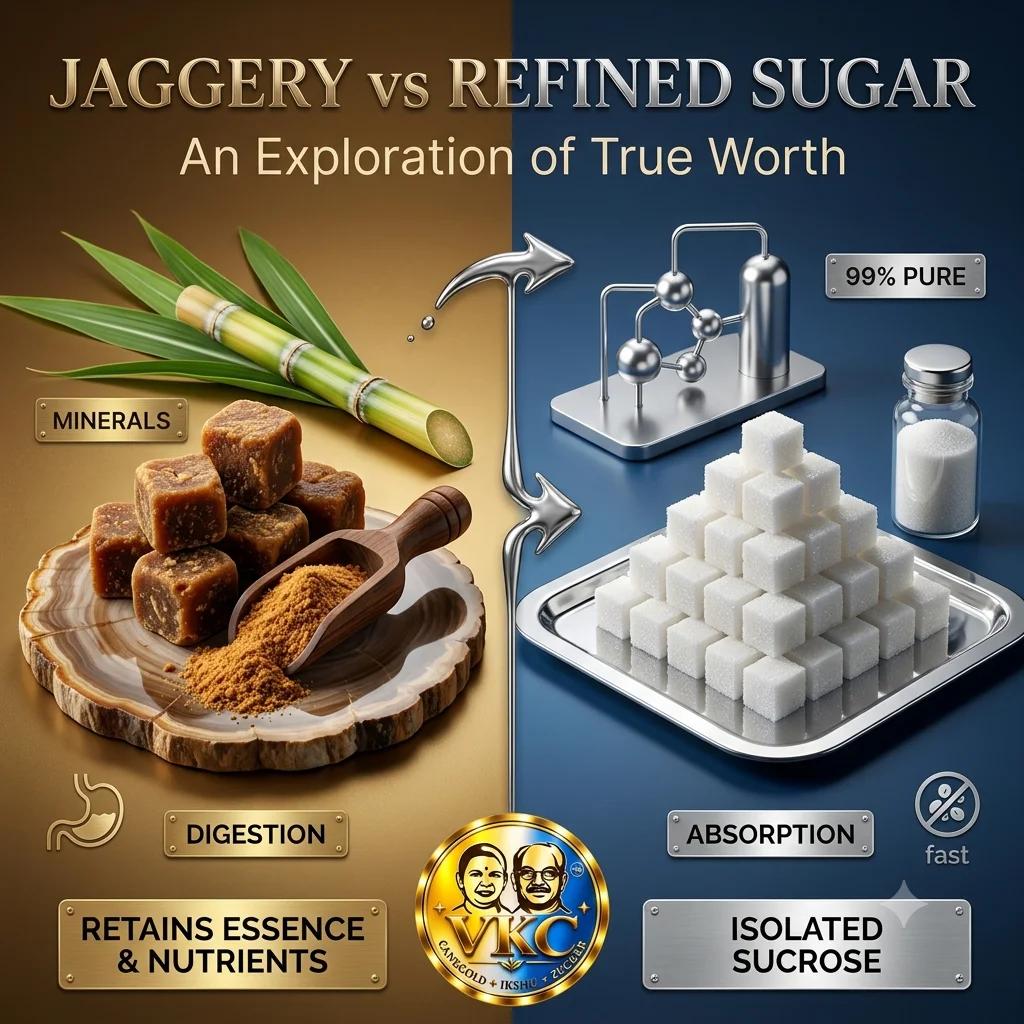
Jaggery vs Refined Sugar: What Actually Changes
Both come from cane. One keeps the minerals, the colour and the flavour; the other keeps only the sweetness. Here is the honest comparison.

Jaggery and white sugar start life as the same sugarcane juice. The difference is what happens next — and what is left in the pack when it reaches you.
How each is made
Refined sugar is produced by crystallising cane juice and then stripping away everything that is not sucrose: the molasses, the minerals, the colour and the flavour. Jaggery skips that stripping. The whole juice is simply boiled down and set, so what remains is closer to the plant.
What stays in jaggery
- Minerals — iron, potassium, magnesium and calcium survive in small but real amounts. Refined sugar has none.
- Molasses — the dark, fragrant part of the cane that gives jaggery its colour and caramel depth.
- Flavour — notes of caramel, toffee and a little smoke, instead of plain sweetness.
What jaggery is not
Jaggery is still a sugar, and it is still calorie-dense. It is a better-tasting, less processed sweetener — not a health food to be eaten freely. People managing blood sugar should treat it with the same care as any other sweetener and follow their doctor's advice.
Using jaggery in everyday cooking
- Swap it one-for-one into tea, coffee and milk; grate a block or use powder.
- In baking, it adds moisture and a deeper colour — reduce liquid slightly.
- Melt it with a spoon of water for sauces, glazes and traditional sweets like payasam and holige.
Our advice is simple: use less sweetener overall, and when you do, choose one that brings something to the table besides sweetness.
Keep reading
More stories for you
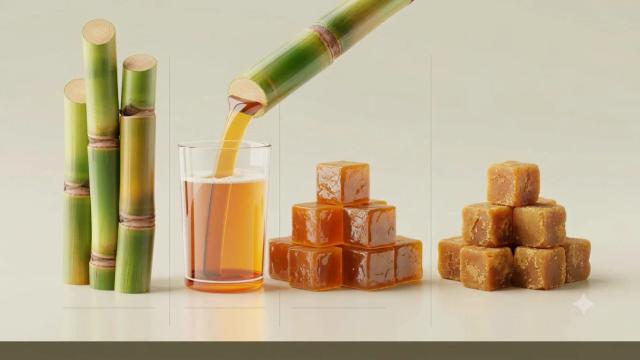
From Cane to Cube: How Mandya Jaggery Is Made
Fresh cane, slow heat and nothing else. A walk through the four steps that turn Mandya sugarcane into golden, chemical-free jaggery.

Festive Gifting with Jaggery: A Thoughtful Alternative to Sweets Boxes
Why a box of pure jaggery, laddus and nut bars says more than another tin of refined sweets — and how to choose the right hamper.